Cleaning Tips
How to Deal With Renovation Dust at Home: Before, During, After
October 10, 2026 · 6 min read · By the TidyHouzz team
Renovation dust is finer than everyday dust, travels farther, and settles again hours after you think you've cleaned it. The winning approach is containment first, daily damage control during the project, and a slow, top-to-bottom cleanup at the end, using damp methods and a HEPA vacuum rather than a broom.
Whether it's a kitchen remodel in a Dedham colonial or a bathroom gut job in a Norwood Cape, the same rules apply.
A Quick Safety Note First
Before anything gets demolished, know what's in your walls.
- Older homes and lead paint. Homes built before 1978 may have lead-based paint. Sanding, scraping or demolishing painted surfaces can release lead dust. Ask your contractor about lead-safe work practices, and don't dry-sweep or dry-dust in those areas.
- Other older materials. Some older flooring, insulation and ceiling textures can contain hazardous materials. If you're unsure, ask a qualified professional to test before work begins.
- Drywall and joint compound dust is very fine and irritating to breathe. Wear a well-fitted mask when cleaning it up.
This isn't a substitute for professional guidance. When in doubt, ask.
Before Work Starts: Contain It
Ten minutes of prep saves days of cleanup.
- Clear the room of everything you can carry, and the rooms next to it of anything precious.
- Seal doorways with plastic sheeting and painter's tape, or ask your contractor about a zipper door.
- Cover vents and returns in the work zone. Turn off forced-air heat or AC during dusty work if you can, so the system doesn't spread dust through the house. Ask your HVAC pro about the right approach for your system.
- Protect floors along the path from the door to the work area with rosin paper or floor protection film, taped at the seams.
- Bag up closets and cabinets near the work zone. Plastic bins with lids for anything you'll need during the project.
- Choose one entry for the crew, ideally a side or back door close to the work.
During the Project: Daily Damage Control
You can't keep a house spotless during a remodel, but you can keep it livable.
- Put a tacky mat or damp towel at the exit of the work area to catch dust on shoes.
- Run a HEPA vacuum along the main path at the end of each day. A regular vacuum without good filtration can blow fine dust right back out.
- Damp-wipe high-touch surfaces in the rest of the house a few times a week: counters, tables, door handles.
- Keep the living areas closed off and tell kids the plastic sheeting isn't a fort entrance.
- Change your HVAC filter more often during and after the project.
- Use an air purifier with a HEPA filter in the rooms you're living in.
Living in a kitchen remodel
Set up a temporary kitchen in another room with a microwave, a coffee maker, a plastic tub for washing dishes, and paper plates for bad nights. Keep food sealed. Fine dust settles into open containers.
After the Work: Wait, Then Clean
Renovation dust keeps falling for a day or two after the work stops. If you can wait 24 to 48 hours before the big cleanup, you'll do it once instead of twice.
Tools you'll want
- HEPA vacuum with brush and crevice attachments
- Plenty of microfiber cloths (they'll be ruined; that's fine)
- Two buckets: one with water and a mild all-purpose cleaner, one for rinsing
- Microfiber mop with spare pads
- Mask, gloves and eye protection
- Step ladder
The order that works
- Ventilate by opening windows if the weather allows.
- Vacuum top to bottom: ceilings, crown molding, light fixtures, ceiling fans, walls, window frames, sills, radiators, baseboards, then floors. Vacuum first, before any wiping, so you're not turning dust into paste.
- Damp-wipe the same surfaces top to bottom. Rinse cloths constantly and switch them out often.
- Clean inside cabinets and drawers, even closed ones. Dust gets in.
- Wash light fixture covers and vent covers.
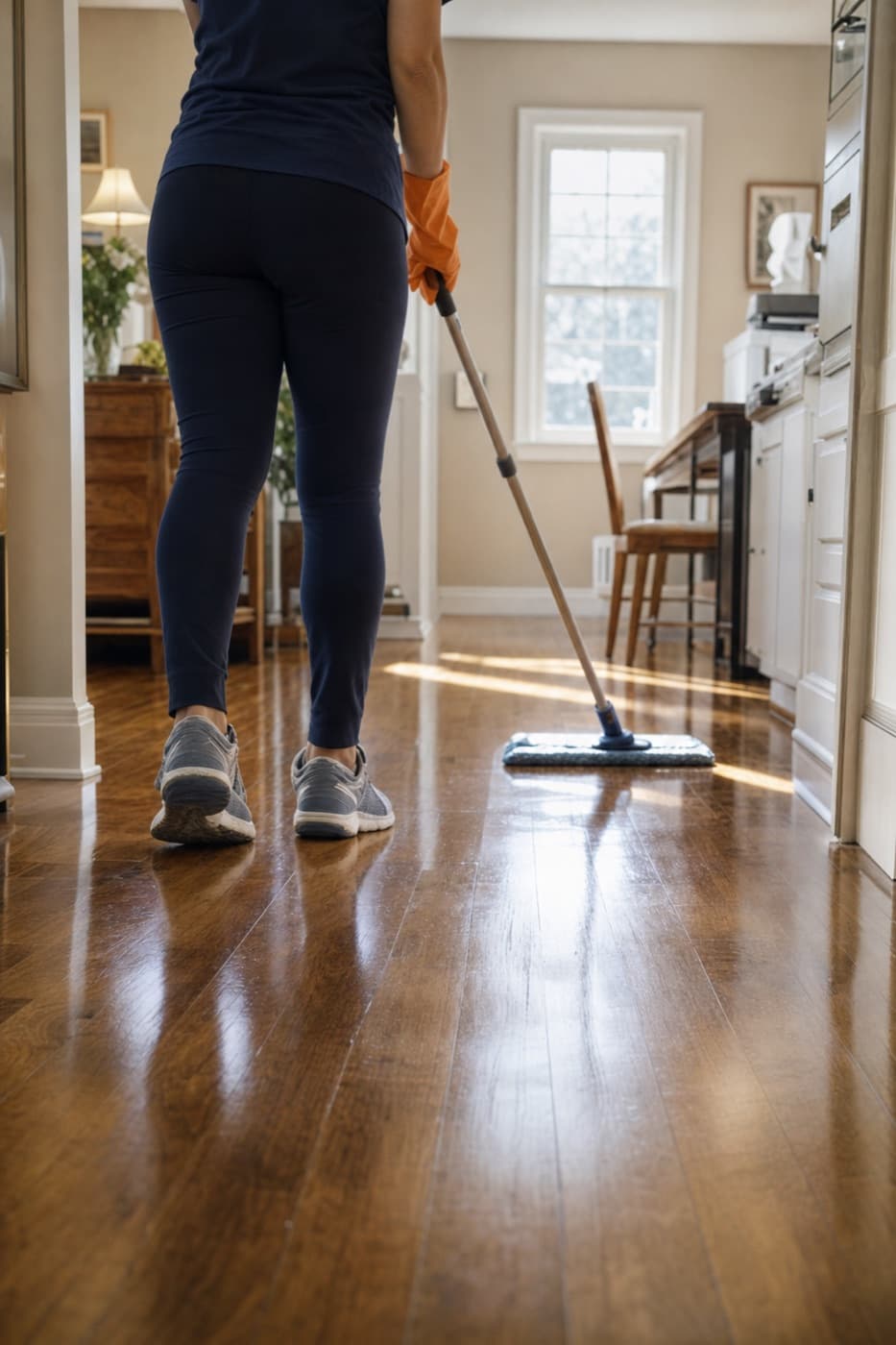
- Vacuum floors again, then damp-mop with a well-wrung mop. On hardwood, use a cleaner made for sealed wood floors and as little water as possible.
- Wash curtains, bedding and soft goods that were anywhere near the work.
- Replace the HVAC filter one more time.
Mistakes That Make It Worse
- Dry sweeping. It throws fine dust back into the air.
- Feather dusters. Same problem.
- A shop vac without a fine-dust filter. It can blow drywall dust right out the exhaust.
- Wet-mopping first. Water plus drywall dust makes a gritty film that streaks.
- Cleaning while work is still happening in the next room.
When Life Gets Back to Normal
Once the dust is truly gone and the room is in use, it's a good moment to set up a regular routine again. Our deep cleaning checklist is a good guide for the rest of the house, and if you'd like help keeping things in shape going forward, a recurring cleaning schedule takes the weekly upkeep off your plate. We serve Dedham, Norwood, Westwood and nearby towns.
Frequently asked questions
How long does renovation dust keep settling?+
Fine dust can stay airborne for hours and keep settling for a day or two after work ends. Waiting before a full cleanup, and running a HEPA air purifier, helps.
Can I use my regular vacuum on drywall dust?+
It's risky. Fine drywall dust can clog filters, strain motors and pass right through bags that aren't designed for it. A HEPA vacuum is the safer choice.
What's the best way to get dust off hardwood floors after a remodel?+
Vacuum with a soft brush head first, then damp-mop with a well-wrung microfiber mop and a hardwood-safe cleaner. Repeat the vacuum step if the mop pad still picks up gray dust.
Ready to get back to a regular cleaning routine? Get an instant estimate at /quote or call or text (781) 929-3795.