Cleaning Tips
Cleaning Older Homes: Practical Tips for Colonials and Cape Cods
October 6, 2026 · 6 min read · By the TidyHouzz team
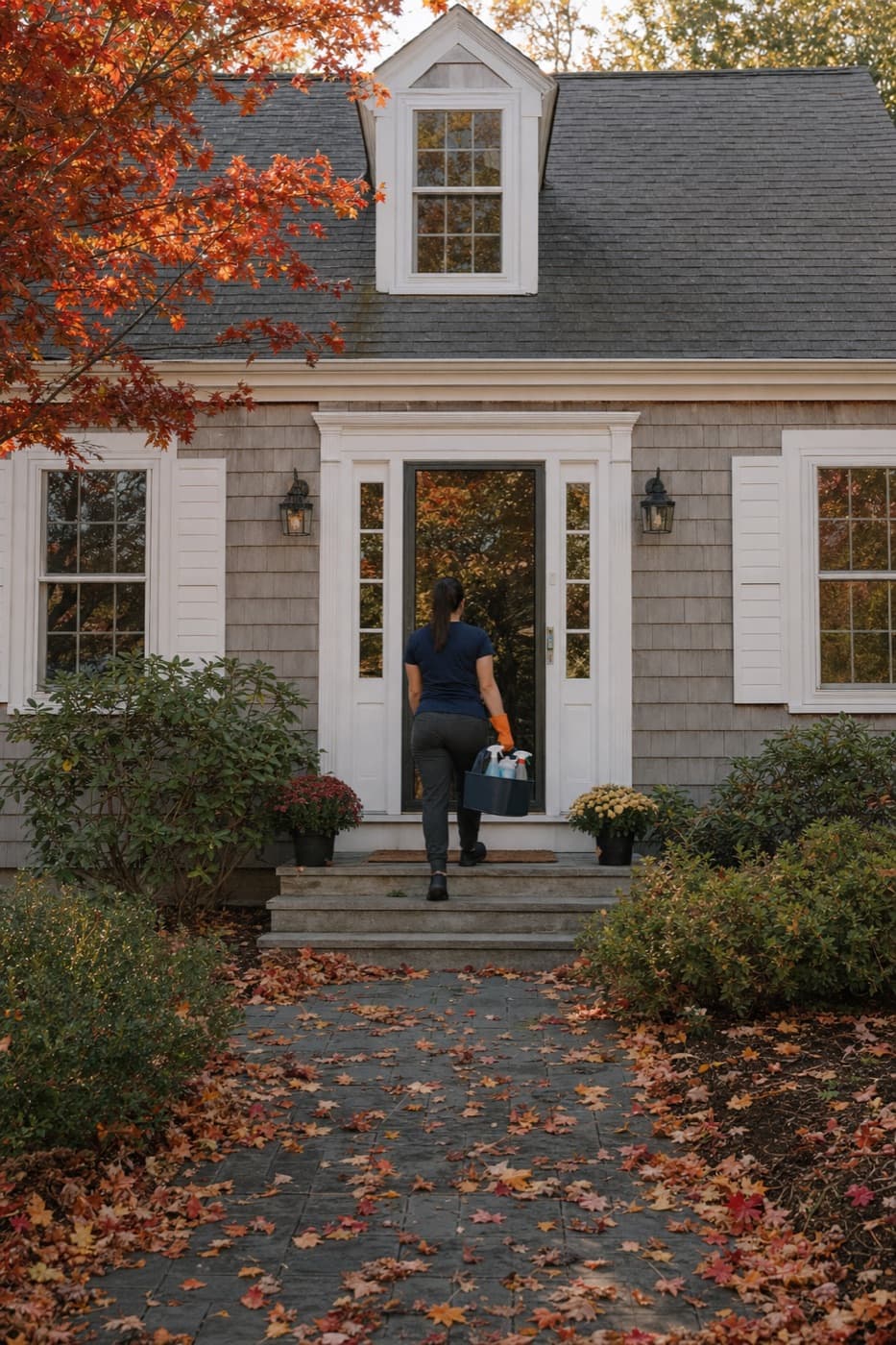
Older homes need a softer touch and a little more patience than new construction. The finishes are often original, the gaps and grooves collect more dust, and harsh products can do damage that's hard to undo. Here's how to clean a colonial or Cape Cod without fighting the house.
Why Older Homes Get Dusty Faster
If your 1940s Cape seems to need dusting twice as often as your friend's new townhouse, you're not imagining it. Older homes tend to have:
- More trim and molding. Every ledge, chair rail and window casing is a dust shelf.
- Air leaks. Drafty windows and gaps around doors let in outside dust and pollen.
- Forced hot water or steam radiators that pull dust into their fins and then circulate it.
- Basements and attics that weren't built to be sealed living spaces.
The goal isn't to make an old house behave like a new one. It's to build a routine that matches how it actually collects dirt.
Original Hardwood Floors
Many colonials and Capes have original oak or pine floors, sometimes refinished several times, sometimes not refinished in decades. Before you clean, figure out what you're working with.
Find out the finish
Drop a little water in an inconspicuous spot. If it beads up, there's likely a surface finish like polyurethane. If it soaks in and darkens the wood, the floor may be oil- or wax-finished, or the finish is worn through. That second group needs much less water.
Cleaning steps
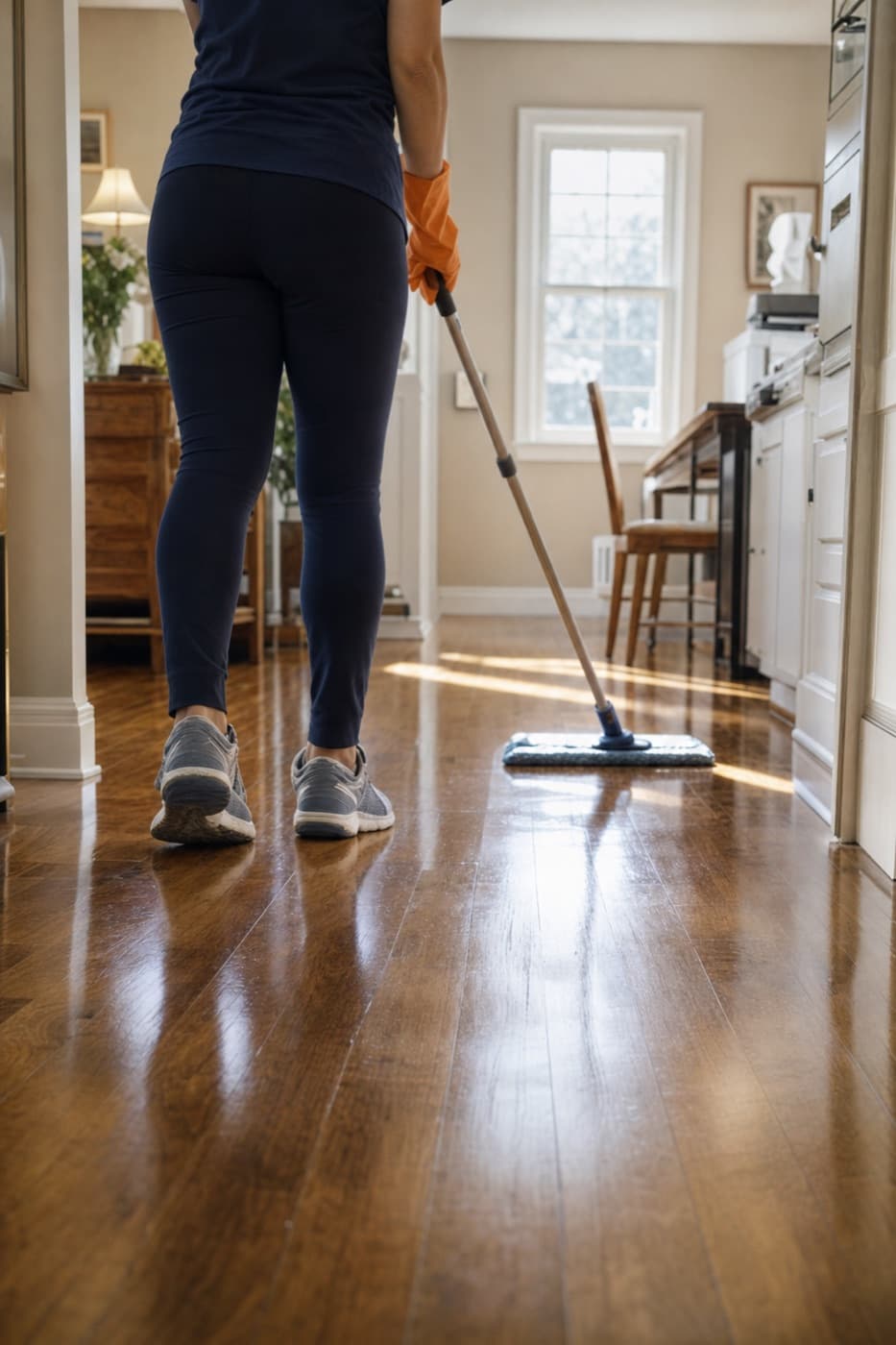
- Dry first. Vacuum with a soft brush head or use a microfiber dust mop. Grit is what scratches old floors.
- Damp, never wet. Use a well-wrung microfiber mop and a cleaner made for sealed wood floors.
- Skip steam mops, vinegar-heavy mixes, and oil soaps on polyurethane, which can leave a dull film.
- Pine is soft. Felt pads under chairs and a mat at every exterior door go a long way.
We go deeper on this in how to clean hardwood floors.
Radiators
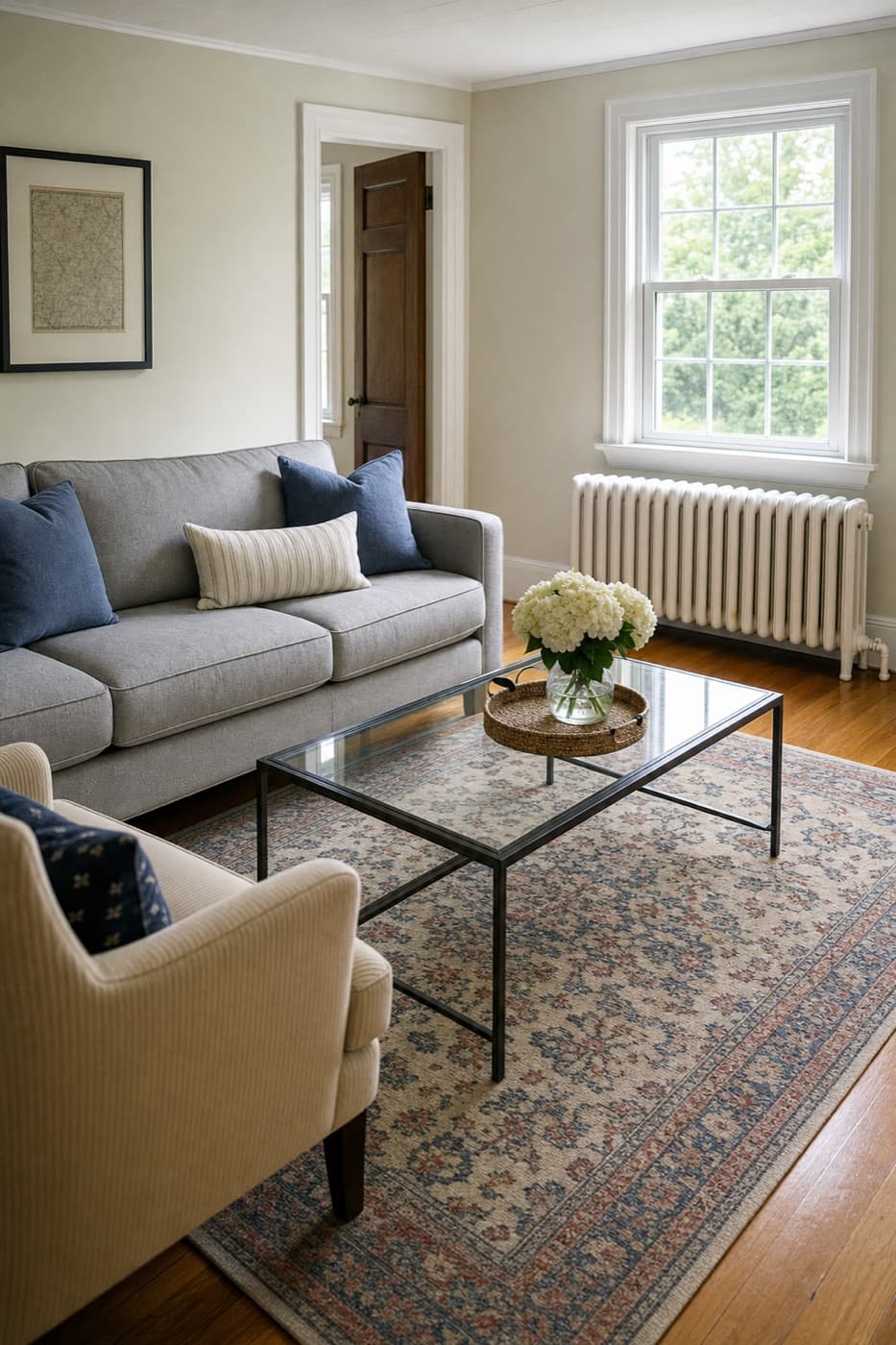
Cast iron radiators are one of the best features of an older New England home and one of the dustiest. Dust in the fins gets warmed and lifted into the room every heating cycle.
- Clean before the heat comes on in fall. It's easier when they're cool.
- Use a radiator brush (a long, skinny brush) to work between the fins, with a towel underneath to catch debris.
- Follow with a vacuum crevice tool.
- Wipe the outside with a damp cloth. If the paint is old and flaking, be gentle, and keep in mind that paint in homes built before 1978 may contain lead. Don't sand or scrape it; ask a professional if it's peeling.
- Clean the wall and floor behind it. That's where the gray streaks come from.
Plaster Walls and Old Paint
Plaster is tougher than drywall in some ways and more fragile in others. Cracks and old repairs can crumble if you scrub hard.
- Dust walls with a microfiber duster or a clean, dry mop head, top to bottom.
- Spot-clean marks with a barely damp cloth and a drop of dish soap. Test a hidden area first.
- Avoid magic erasers on flat or older paint. They can burnish a shiny patch that's more noticeable than the scuff.
- Wipe around light switches and door frames regularly. Original trim often has many layers of paint, and grime settles into the grooves.
Old Bathroom Tile and Fixtures
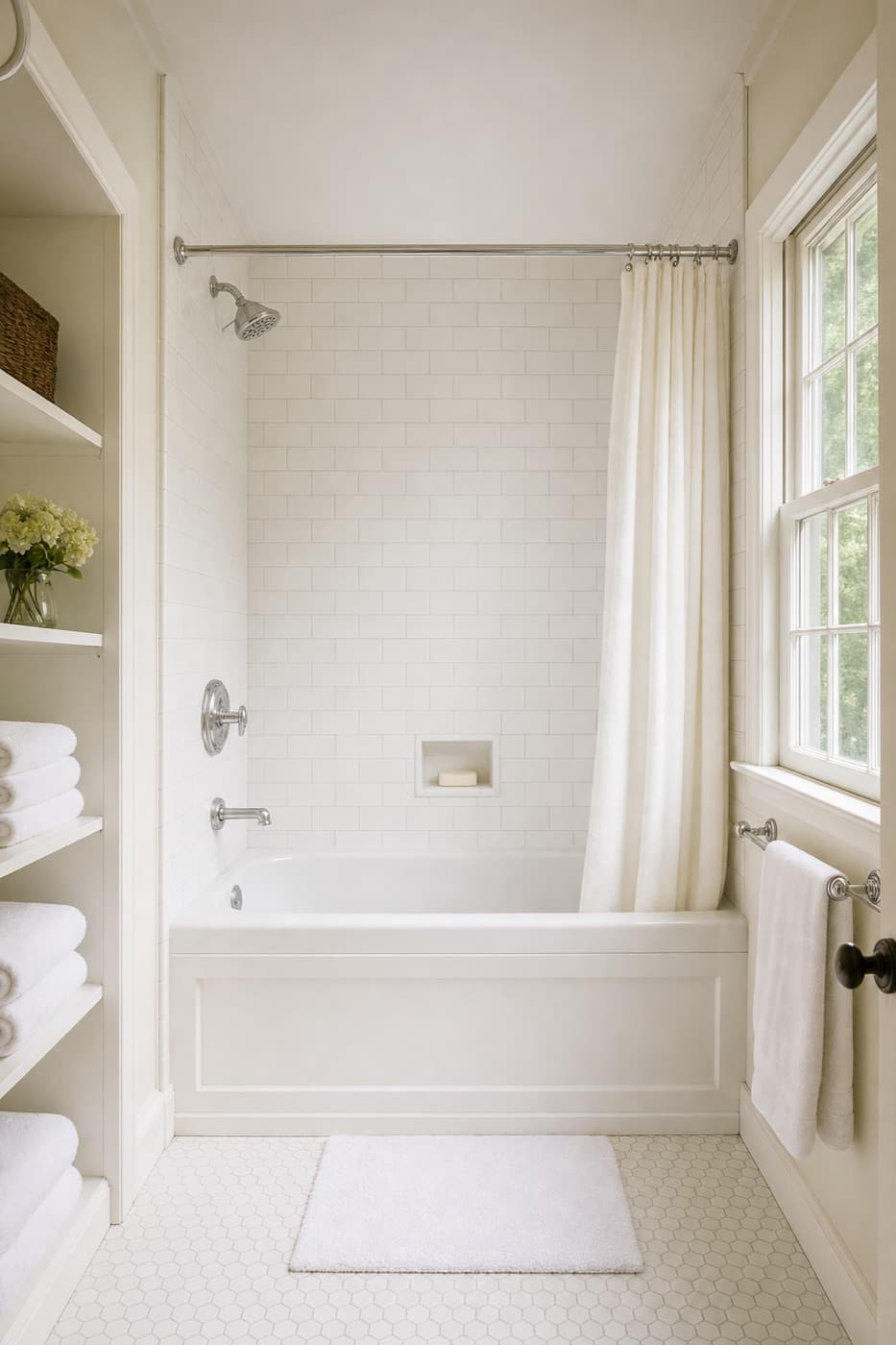
Vintage bathrooms often have small hex or penny tile, old porcelain tubs and original grout. They clean up beautifully with the right products and get damaged by the wrong ones.
- Grout: Use a soft brush and a mild cleaner. Old grout can be crumbly, and acidic cleaners can eat away at it.
- Porcelain tubs and sinks: Choose a non-scratch cleanser. Abrasive powders dull old porcelain over time.
- Chrome and nickel fixtures: Wipe with a damp cloth and dry them to prevent spots. Avoid harsh descalers on worn plating.
- Ventilation: Many older bathrooms have weak exhaust fans or none. Run the fan or crack a window after showers to keep mildew down.
Windows, Sills and Built-Ins
Older windows, especially original wood double-hungs, gather dirt in the tracks and on the sills, plus condensation in winter.
- Vacuum window tracks with a crevice tool, then wipe with a damp cloth.
- Dry sills when you see condensation. Repeated moisture damages wood and paint.
- Built-in bookcases and china cabinets: empty one shelf at a time, dust, wipe, and put things back. It's a great rainy-Saturday job.
Building a Routine That Fits
Older homes reward regular light cleaning more than occasional heavy scrubbing. A simple rhythm:
- Weekly: Floors, kitchen, bathrooms, quick dust of main surfaces.
- Monthly: Baseboards, trim, window sills, radiator tops.
- Seasonally: Radiator fins, inside built-ins, light fixtures, behind furniture.
If you'd like help keeping up, a deep cleaning is a good reset for trim, baseboards and the detail work, and recurring visits handle the weekly layer. We clean plenty of older homes around Norwood, Dedham and Westwood and are happy to use gentler or eco-friendly products on request.
Frequently asked questions
Are steam mops safe for old hardwood floors?+
Generally no. Heat and moisture can push into seams and worn finish, causing cupping or clouding. A dry dust mop followed by a well-wrung damp mop is safer.
How do I clean dust off radiators without making a mess?+
Lay a damp towel under the radiator, work the dust down with a long radiator brush, then vacuum. Do it before heating season when the radiator is cool.
What cleaners should I avoid in an older house?+
Be careful with acidic cleaners on old grout and natural stone, abrasive powders on porcelain, and anything harsh on worn finishes. When in doubt, use mild soap and water and test a hidden spot first.
Want help caring for your older home? Get an instant estimate at /quote or call or text (781) 929-3795.