Seasonal
How to Protect Your Floors and Rugs From Road Salt This Winter
September 21, 2026 · 6 min read · By the TidyHouzz team
Road salt protects you on the driveway and wrecks your floors once it comes inside. The fix has two parts: stop as much salt as possible at the door, then clean what gets through quickly and with the right product for your floor type. Here's how to do both before the first storm hits.
What Road Salt Actually Does to Floors
That white crust on your boots is usually sodium chloride (rock salt), sometimes mixed with calcium chloride or magnesium chloride, which towns and homeowners use because they work at colder temperatures. On floors they cause a few problems:
- Abrasion. Salt crystals act like sandpaper underfoot, scratching finishes on hardwood and wearing down sealers on tile.
- White film. As salty slush dries, it leaves a chalky haze on tile, vinyl and hardwood.
- Oily residue. Calcium and magnesium chloride can leave a slick, greasy-looking film that regular mopping smears around.
- Moisture damage. Salt pulls in water. Puddles that sit on hardwood can work into seams and cause swelling or dark spots.
- Rug stains. Salt lines dry into carpet and area rugs as stiff, white rings.
The good news: almost all of it is preventable or reversible if you deal with it early.
Step 1: Stop Salt at the Door
The cheapest floor protection is the stuff that never gets past the threshold.
Use a two-mat system
- Outside: A coarse, scraper-style mat (rubber or coir) to knock off snow and crystals.
- Inside: An absorbent, rubber-backed mat long enough for at least a few steps, so people wipe both feet more than once.
Shake out the outdoor mat often and vacuum or wash the indoor one weekly during heavy salt season.
Set up a boot station
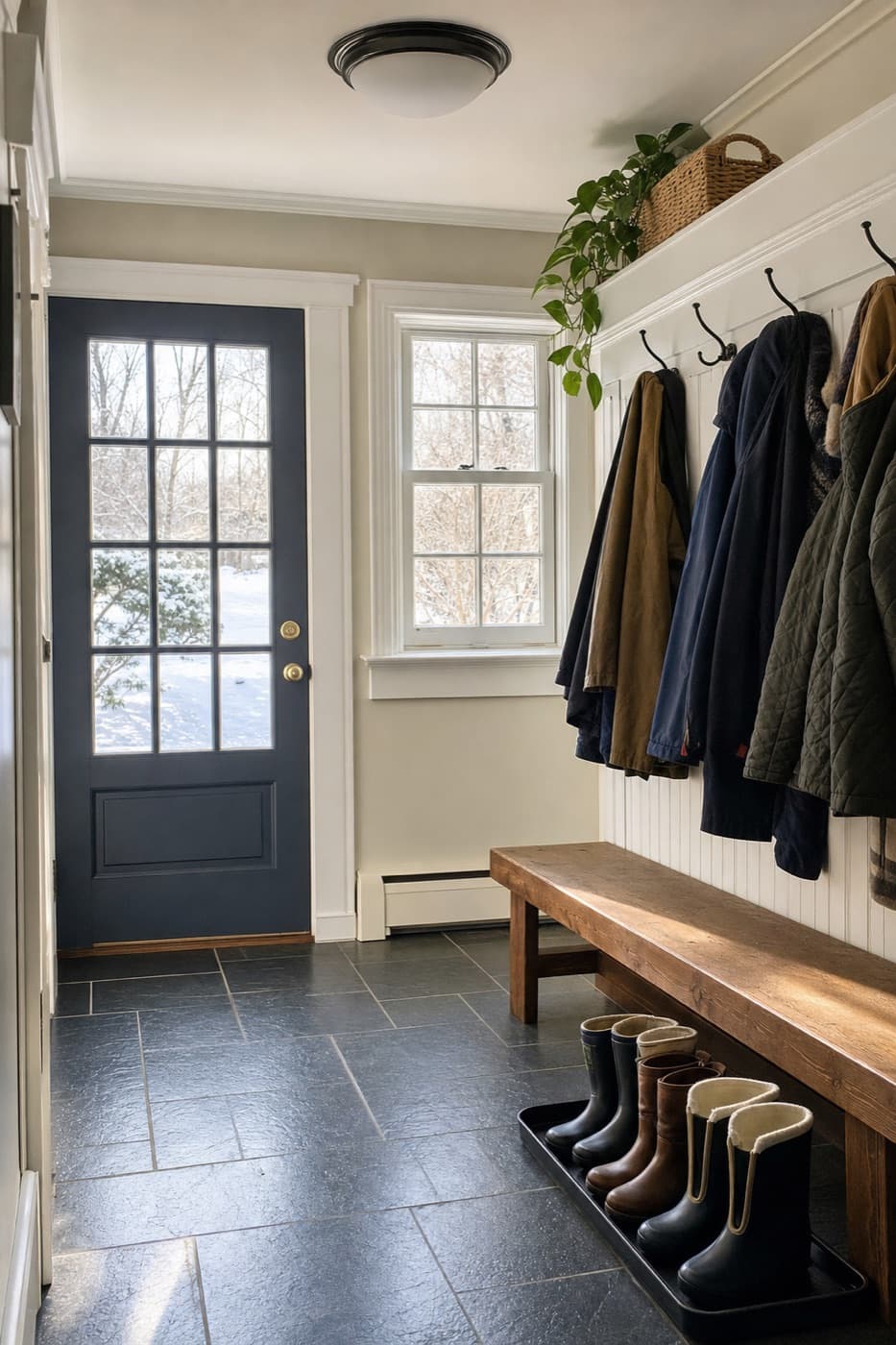
- A boot tray with raised edges catches meltwater before it reaches the floor.
- A bench so people can sit and take boots off instead of walking in "just for a second."
- Hooks for wet coats so drips land on the tray, not the hardwood.
If your house has a mudroom, make it the only winter entrance for the family. Our guide to mudroom cleaning and organization has setup ideas.
Make "shoes off" easy
A basket of house slippers by the door does more than a sign. Guests are more likely to take off boots when there's an obvious place to put them.
Treat pets' paws
Dogs track in as much salt as people. Keep an old towel by the door and wipe paws after every walk. It protects your floors and your dog's pads.
Step 2: Clean Salt Residue by Floor Type
Always check your flooring manufacturer's care instructions first. When in doubt, test on a hidden spot.
Hardwood
Hardwood is the most vulnerable, and it's everywhere in older Norwood and Dedham homes.
- Dry first. Wipe up puddles as soon as you see them.
- Sweep or vacuum with a soft-bristle head (beater bar off) to remove crystals before wiping, so you aren't grinding them in.
- Damp-mop with a cleaner made for finished hardwood. Use a barely damp microfiber mop, never a soaking one.
- Dry the floor with a clean towel or dry microfiber pad.
Avoid steam mops, soaking wet mops and harsh or abrasive cleaners on hardwood. If the white haze remains after cleaning, it may be in the finish itself; talk to a flooring professional before trying anything aggressive.
Tile, porcelain and vinyl
These handle salt better, but the haze is stubborn.
- Sweep or vacuum loose grit.
- Mop with warm water and a small amount of white vinegar (a commonly used mix is about half a cup per gallon). Vinegar helps dissolve salt film.
- Rinse with plain water and dry.
Do not use vinegar on natural stone like marble, travertine or limestone. Acids can etch stone. Use a pH-neutral stone cleaner instead.
Laminate
Treat laminate like hardwood: minimal water, a cleaner made for laminate, and dry quickly. Standing water can get into seams and cause swelling.
Rugs and carpet
- Let it dry completely. Wet salt just spreads.
- Vacuum to pull out the crystals.
- Blot the stain with a mix of warm water and a little white vinegar on a clean cloth. Don't scrub.
- Blot with plain water, then press dry with a towel.
For valuable or delicate rugs, check the care label or ask a rug specialist.
Step 3: Build a Winter Floor Routine
Consistency beats a big cleanup in March.
- After each storm: Wipe entry floors and mats; empty the boot tray.
- Every few days in salt season: Vacuum or sweep high-traffic paths and damp-mop entryways.
- Weekly: Full mop of hard floors near entrances, wash indoor mats, wipe baseboards near the door where splash marks collect.
- End of winter: A thorough cleaning of all hard floors and rugs to remove what's accumulated.
Little Extras That Help
- Felt pads under chairs near entrances prevent salt grit from scratching as chairs slide.
- Runner rugs in hallways leading from the door catch the second wave of salt.
- A dedicated "salt mop" kept by the mudroom makes quick cleanups more likely.
- Pet-safe ice melt on your own walkway can reduce what dogs carry in. Check the label for your surface too.
When Winter Wins
By February, a lot of homes around Canton, Sharon and Norwood have a gray haze in the entryway no matter what. That's a good time for a professional reset. Our recurring cleaning visits include floor care in entryways and mudrooms all season, and we can switch to eco-friendly products on request.
Frequently asked questions
Can I use vinegar to remove road salt from hardwood?+
Many hardwood manufacturers advise against vinegar on finished floors. A cleaner made specifically for hardwood is the safer choice. Always check your floor's care instructions.
Why does my floor still look cloudy after mopping?+
Calcium and magnesium chloride leave a residue that ordinary mopping can smear. Rinse with clean water after mopping, then dry, and repeat if needed.
How often should I clean salt off floors?+
Wipe entries after every storm and give high-traffic areas a damp mop every few days during salt season. Letting salt sit is what causes most of the damage.
Ready for a winter reset? Get an instant estimate at /quote, or call or text (781) 929-3795.